- +603 7960 0895
- sales@klayenersol.com
- Mon - Fri 09:00 - 17:00

- Home
- About Us
- Products
- Services
- Projects
- Blogs
- Gallery
- Project & Case Studies
Reformer furnaces operate at extremely high temperatures, and over time, their refractory insulation can degrade, often due to anchor erosion. This deterioration can lead to hot spots on the external roof casing. If not promptly addressed, these hot spots may result in structural damage, increased heat loss, and unplanned shutdowns, causing significant production losses.
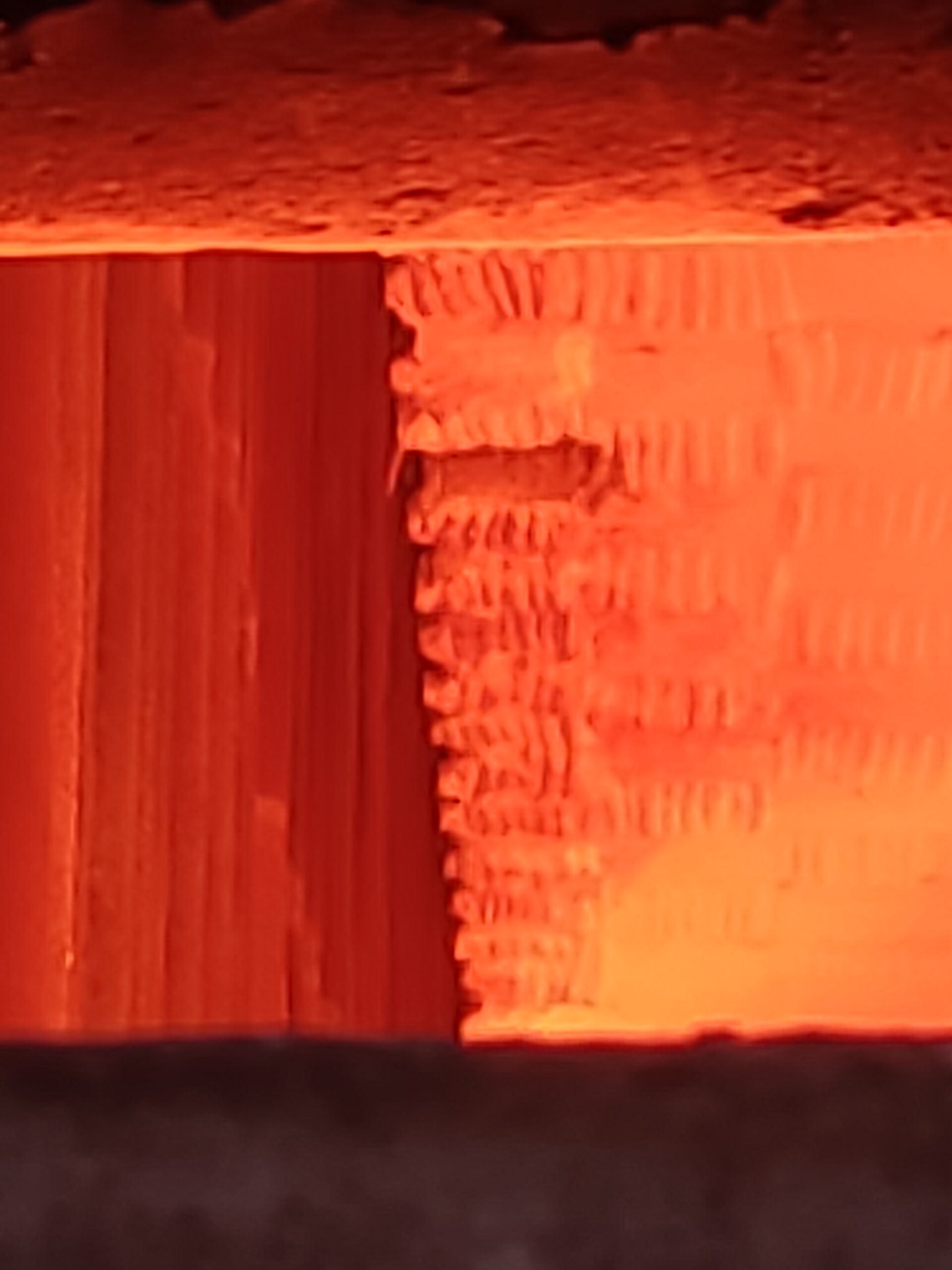

Using thermography scanner, the location of hot spot is identified on the reformer roof. In this case, the hotspot is identified in between the catalyst tubes. After confirming with the client, the roof casing is perforated to create an opening.

Using thermography scanner, the location of hot spot is identified on the reformer roof. In this case, the hotspot is identified in between the catalyst tubes. After confirming with the client, the roof casing is perforated to create an opening.

High temperature resistant compound is then injected to fill the void between the backing and the casing. Once the opening is fully filled with the compound, additional anchors is inserted for reinforcement

After the repair has been completed, the casing is covered again with new plates. Additional thermal scans and visual inspections are then conducted to confirm temperature reduction and insulation effectiveness.