

1. Offshore Fire Risk and the Role of Passive Protection
Offshore platforms bring together hydrocarbons, pressurised process systems, electrical equipment, structural steel and people within a compact operating environment. A loss of containment can create a fire scenario that develops rapidly, while access for emergency response may be constrained by weather, module layout and evacuation requirements. Fire protection therefore needs to be considered as part of the facility’s overall safety strategy, not as an isolated product selection.
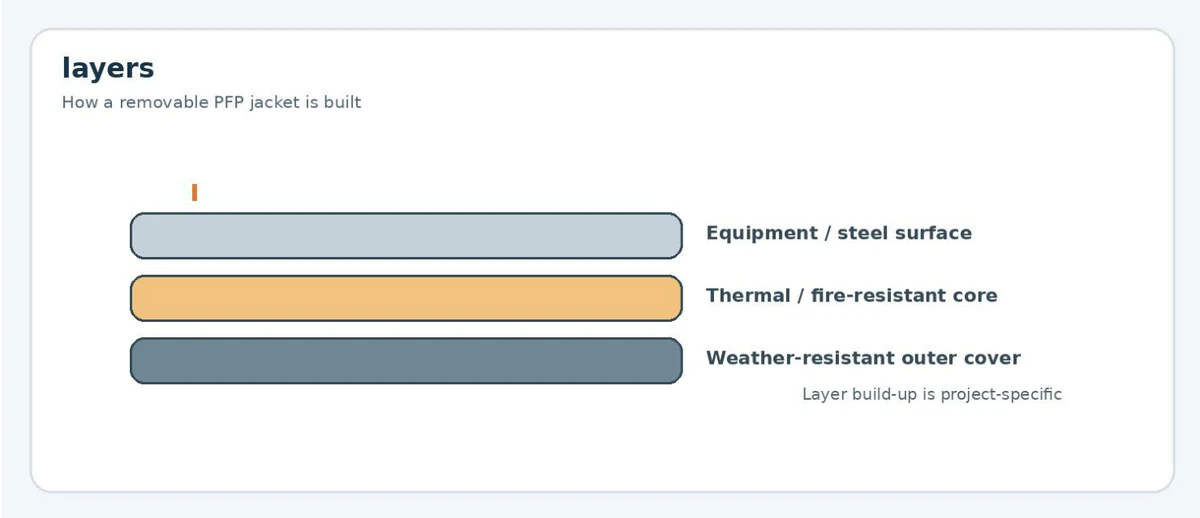
Passive Fire Protection (PFP) is intended to limit the rate at which heat reaches protected equipment or structural elements during a defined fire exposure. Unlike active systems, such as detection, deluge or suppression, passive protection does not depend on an alarm, power supply or operator action to begin performing its protective function. It is one layer in a wider safety system and does not replace process isolation, emergency shutdown, gas detection, firewater or evacuation arrangements.
The design objective is usually linked to a specific fire scenario and a required period of performance. Hydrocarbon jet fires and pool fires have different exposure characteristics. A jet fire can produce highly localised, high-velocity flame impingement; a pool fire exposes equipment to a different heat-flux profile. The correct protection system must therefore be selected against the project’s defined hazard, equipment geometry, required rating and acceptance criteria.
For offshore assets, the challenge is not simply to apply a fire-resistant material. The solution must also tolerate salt-laden air, rain, ultraviolet exposure, vibration, thermal movement, restricted access and frequent inspection. Equipment may need to be opened, tested or maintained during its operating life. This is where removable PFP jackets can provide a useful combination of fire protection and maintainability.
KLAY EnerSol describes its PFP offering as engineered jackets, panels and blankets for oil and gas, refineries, petrochemical plants, offshore platforms and other demanding industrial environments. Its portfolio includes ContraFlex® PFP jackets and Pyrogel® XT-F flexible PFP blankets. The appropriate configuration must always be selected for the project specification and verified against the relevant tested system.
2. What Is Removable Passive Fire Protection?
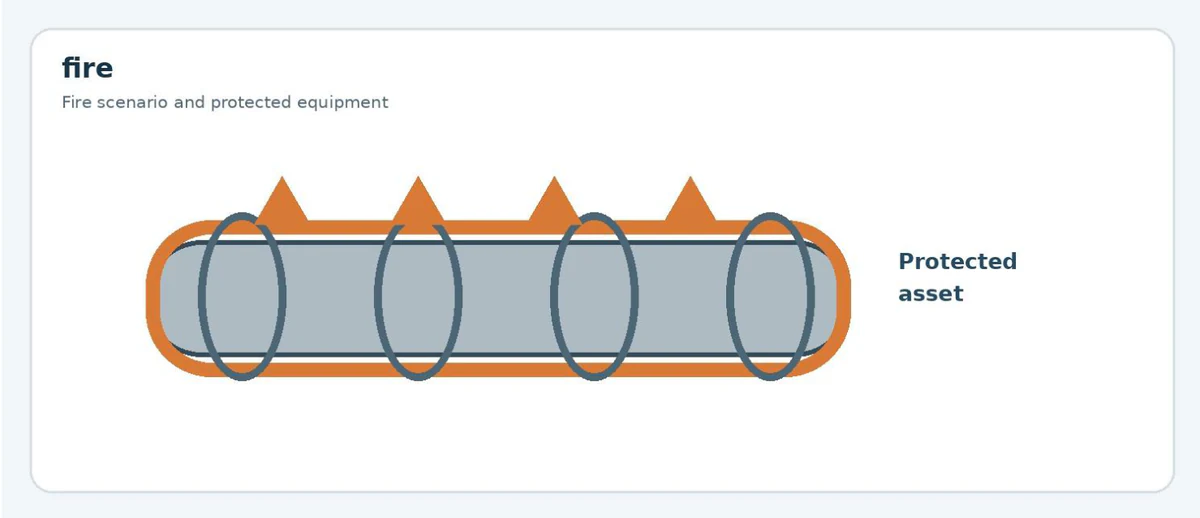
Removable Passive Fire Protection is a prefabricated protective enclosure designed to be fitted around selected equipment and removed when inspection or maintenance access is required. The jacket is generally assembled from a specified combination of fire-resistant insulation layers, protective outer fabric or cladding, seams, closures and mechanical fastening components. The exact construction is product- and application-dependent; it should never be assumed that all removable jackets have the same materials or fire performance.
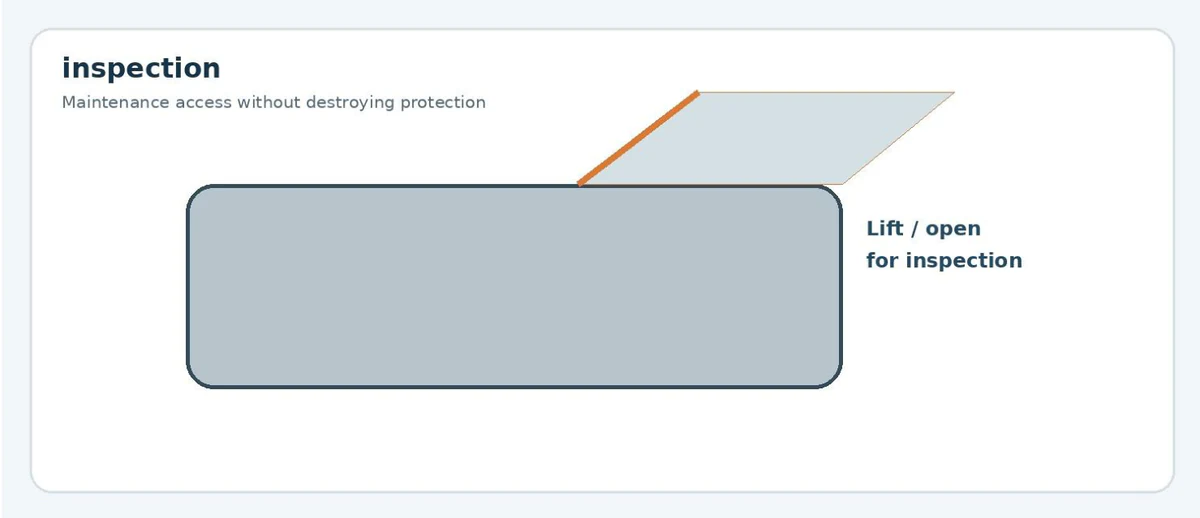
The key distinction is that the protection is designed as a removable assembly rather than a permanent coating applied directly to the equipment. This can be valuable where an asset has inspection points, moving parts, bolted joints or components that must be accessed periodically. When access is required, authorised personnel can remove the relevant sections in accordance with the approved method, complete the work, inspect the exposed surfaces and reinstall the jacket.
A well-designed removable system is not a loose blanket wrapped around a pipe. It is an engineered assembly with defined dimensions, overlaps, seams, attachment points, labels and installation orientation. The design must address the equipment’s shape, operating temperature, expected movement, environmental exposure and the fire scenario for which protection is required.
KLAY EnerSol’s website identifies ContraFlex® as a range of tailor-made flexible PFP and insulation jackets. The company lists removability, reusability, low installation time, reduced inspection and maintenance time, and suitability for complex shapes among its product features. These are product claims that should be checked against the current technical datasheet, project specification and approved installation instructions before procurement.
The phrase “removable” must not be confused with “unrestricted removal”. Any removal and reinstatement can affect system integrity if sections are damaged, incorrectly aligned, left open or fitted with missing fasteners. Asset owners should maintain a controlled procedure, trained personnel and records of inspection and reinstatement.
3. Why Offshore Platforms Need Flexible PFP Solutions
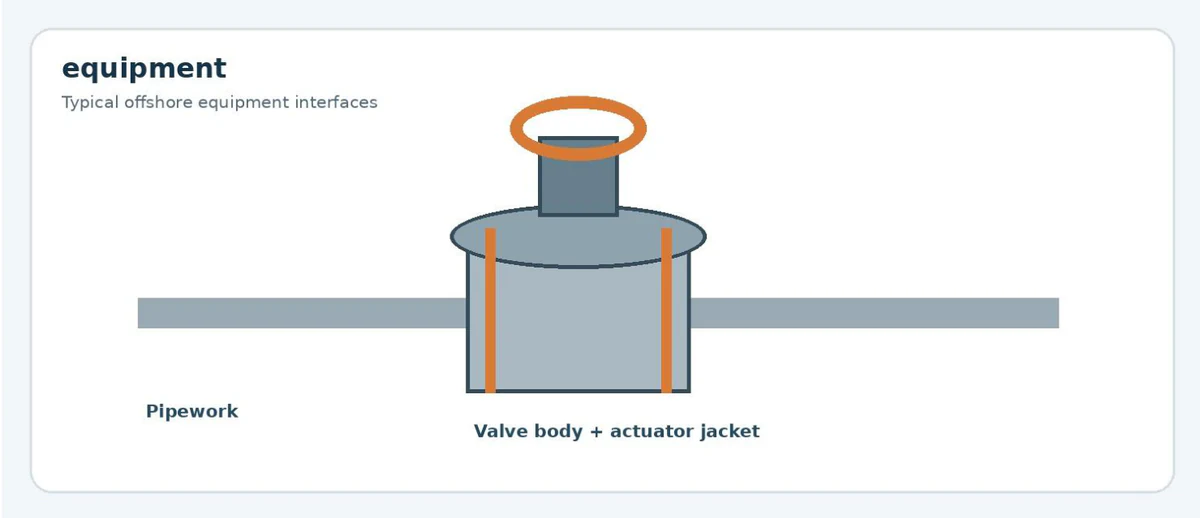
Offshore facilities have a high density of process equipment and a limited amount of deck space. Piping routes pass close to structural steel, cable trays, instrument lines, access platforms and other services. Valves and actuators are often installed in positions where a conventional rigid enclosure or a thick applied coating is difficult to fit without affecting access or adjacent equipment.
A removable jacket can be designed around irregular geometry, including valve bodies, actuator housings, flanges, nozzles, supports and other protrusions. The design team must preserve operating clearances and ensure that the jacket does not interfere with handwheels, actuator travel, emergency operation, lifting points, drains, vents or instrument access. The ability to customise a jacket is particularly useful where the equipment cannot be treated as a simple straight pipe.
Offshore projects also face schedule pressure. Mobilising personnel, tools and materials to a platform can involve vessel or helicopter logistics, permit coordination, weather windows and limited work hours. Prefabricating jackets onshore can reduce the amount of cutting, fitting and adjustment required offshore. This does not eliminate the need for site verification, but it can shift controlled work into a more accessible fabrication environment.
Weight and space are important design constraints. A solution must be checked for its installed mass, support requirements, clearances and effect on adjacent systems. A thicker system may be unacceptable at a congested location even if it provides the required fire resistance. In some cases, a different tested product configuration or a flexible blanket solution may be considered, subject to engineering approval.
KLAY EnerSol’s published offshore project example describes a Malaysian platform where the client required protection against a J30 hydrocarbon jet-fire scenario for selected piping and equipment during infill drilling activities. The project account explains that adjustable prefabricated jackets were used where survey information was uncertain, while flexible Pyrogel® XT-F blankets were used at locations where the proposed jacket thickness could not fit because of clashes. The example illustrates why offshore PFP often requires a coordinated system approach rather than one standard detail for every location.
4. Critical Assets and Typical Applications
The equipment selected for PFP should come from a documented fire risk assessment and the facility’s performance requirements. Not every pipe, valve or vessel needs the same protection. Priority is typically given to assets whose failure could escalate an incident, prevent safe shutdown, compromise containment or threaten essential emergency functions.
Common applications can include emergency shutdown valves, remotely operated valves, risers, high-pressure piping, knock-out drums, process vessels, heat exchangers, instrument connections and selected structural or equipment interfaces. The exact scope depends on the fire and explosion study, layout, consequence analysis, safety case, equipment criticality and applicable project standards.
Emergency shutdown valves deserve particular attention because their availability may be essential to isolating hydrocarbon inventory. The jacket must not obstruct actuator movement, manual operation, position indicators, instrument tubing or maintenance access. The design should also account for the valve’s full operating envelope and any removal procedure specified by the equipment manufacturer.
Risers and associated equipment can be exposed to severe environmental conditions and may have complex support arrangements. A removable PFP design must be checked against the location, access, splash-zone limitations and the applicable product approval. The suitability of any particular jacket for a riser depends on the approved application and test evidence; a product should not be extended to a different exposure zone by assumption.
Knock-out drums and other vessels may require large, multi-piece jacket arrangements. Engineering must consider nozzles, manways, lifting lugs, platforms, support skirts and inspection openings. Each removable section should be identifiable so that it can be returned to its correct position after maintenance.
The KLAY EnerSol website also describes applications for valves and actuators, instrument lines, ESDV/MOV/SDV equipment, risers outside the splash zone, manways, air receivers, junction boxes, cable trays, process vessels and heat exchangers. These examples are useful starting points for a scope review, not a substitute for checking the precise approved application and design basis.
5. Engineering Design: Fit, Fire Rating and Materials
The engineering process begins with the required performance, not with a generic jacket thickness. The design basis should identify the fire type, required exposure duration, protected substrate, equipment operating conditions, ambient range, environmental exposure, dimensional constraints and any additional mechanical or blast requirements. A system tested for one arrangement cannot automatically be assumed to perform identically on a different geometry or with altered materials.
Fire testing and certification must be interpreted carefully. ISO 22899-1 addresses determination of resistance to jet fires for passive fire protection materials. UL 1709 is a rapid-rise fire test standard for protection materials used on structural steel. The relevant test report, certification scope, substrate, thickness, fixing method and limitations should be reviewed to establish whether the evidence matches the intended equipment and duty. A stated rating such as J30 or J60 is meaningful only when it is tied to the correct tested system and project acceptance criteria.
Material selection should consider the full service environment. The outer layer may need resistance to water ingress, abrasion, ultraviolet exposure and salt-laden atmosphere. Seams and closures should remain secure under vibration and thermal movement. The internal insulation must retain its specified configuration and thickness. Any metallic components should be compatible with the environment and the equipment’s corrosion-control strategy.
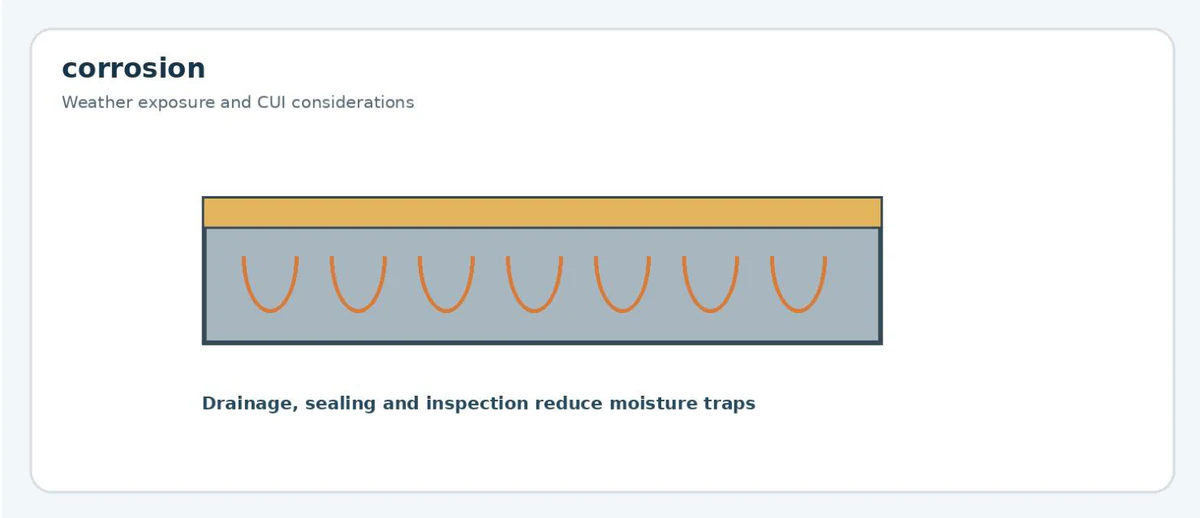
The design must also address corrosion under insulation (CUI). Removable protection can make inspection more practical, but it does not automatically eliminate CUI risk. Water entry, trapped moisture, damaged coatings, poor drainage and inappropriate closure details can still create corrosion conditions. The jacket should be designed with suitable weather shedding, drainage and inspection provisions, and the substrate should be inspected when the jacket is removed.
KLAY EnerSol lists certifications and additional tests for ContraFlex® on its product page, including ISO 22899-1, UL 1709, ISO 20340, ISO 11507 and ISO 9227, as well as stated low-temperature and overpressure testing. Project teams should request the current certificates and test reports and confirm the exact configuration and limitations with the supplier. Standards references in an article do not certify a specific installation.
6. Survey, Measurement and Prefabrication
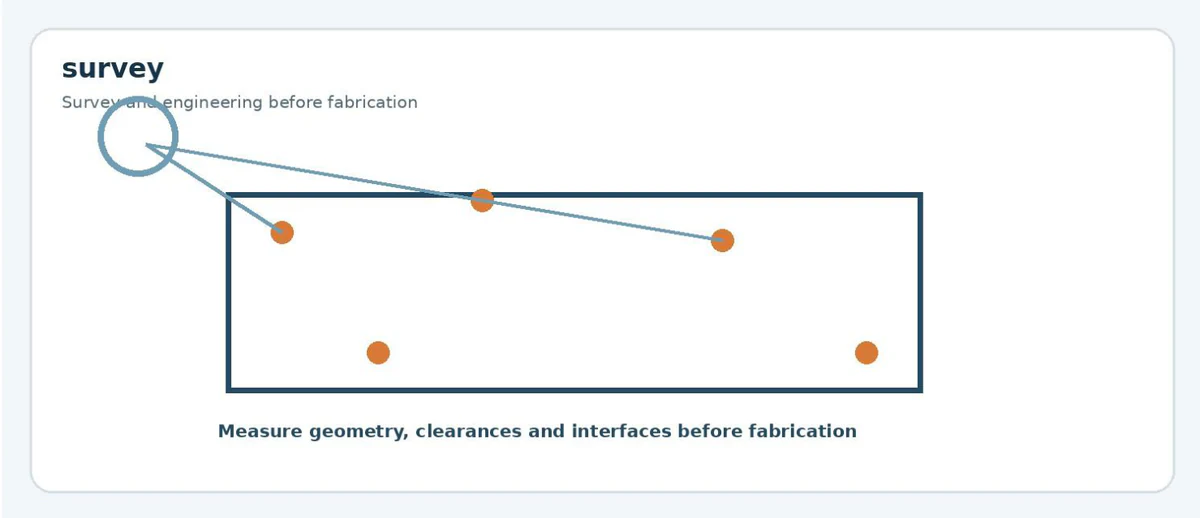
Accurate survey information is one of the strongest predictors of a successful removable PFP installation. Before fabrication, the team should confirm equipment dimensions, orientation, nozzle and branch locations, flange positions, supports, brackets, instrument connections, access routes and the available clearance for fitting and future removal. Existing drawings are valuable, but they should be checked against actual site conditions because offshore equipment may have been modified after the original design.
A survey plan should identify each protected item with a unique tag or location reference. Photographs, dimensioned sketches, marked-up drawings and, where appropriate, 3D scanning can help capture complex geometries. The survey should also record the practical working space available to installers and maintainers. A jacket that fits the equipment but cannot be manoeuvred into position is not a successful design.
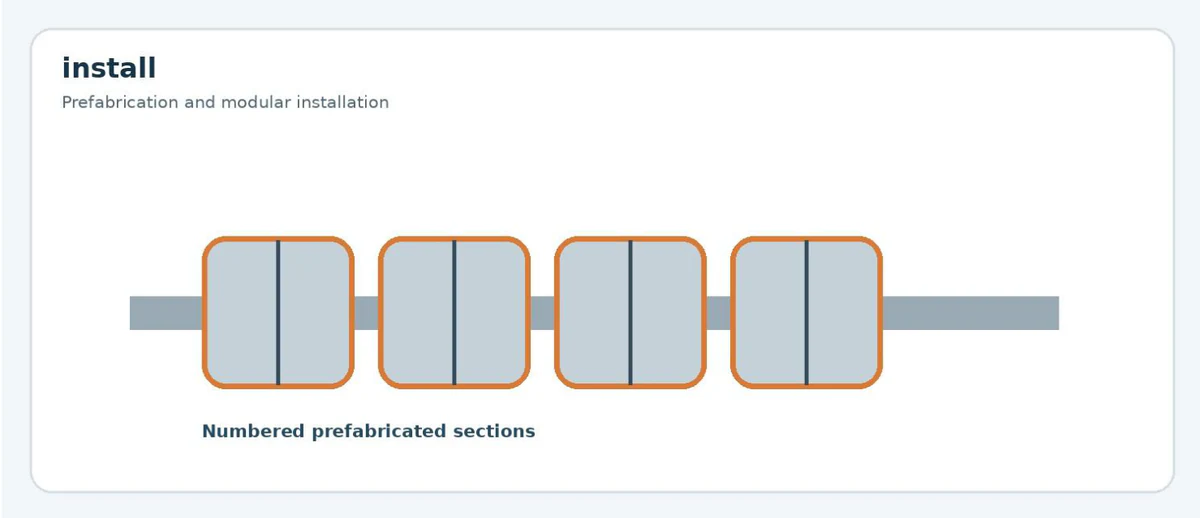
The engineering team can then divide the assembly into manageable sections. Section boundaries should be placed where they support practical installation and removal while maintaining the tested system’s required overlaps and closures. Each section should have a clear identification mark, orientation and fastening detail. Interfaces around valve stems, actuator housings, drains and other protrusions require particular care.
Where survey access is uncertain, the project should record the uncertainty and agree a controlled method for managing it. Options may include adjustable details, agreed site templates, hold points before fabrication, or a limited amount of planned offshore adaptation. Uncontrolled cutting or substitution in the field can invalidate the design basis and should not be treated as an acceptable default.
Prefabrication can improve quality by allowing repeatable workmanship, controlled material handling and inspection before dispatch. The fabrication package should include approved drawings, material traceability, section numbering, inspection records, packing lists and installation instructions. Materials should be protected during storage and transport so that the jackets arrive offshore clean, dry and undamaged.
7. Installation Planning and Offshore Execution
Installation planning should begin before materials arrive at the platform. The project team should review work permits, simultaneous operations, access restrictions, lifting and handling requirements, dropped-object risks, working-at-height controls, weather exposure and the platform’s emergency arrangements. The installation sequence should be coordinated with operations so that critical equipment remains available or is safely isolated as required.
Before fitting a jacket, the equipment surface and any existing coating should be inspected. The team should confirm that the substrate is in an acceptable condition, that the correct jacket section has been selected and that all fastening components are present. Any discrepancy between the equipment and the approved drawing should be raised for engineering disposition rather than hidden by forcing the jacket into place.
Installation should follow the manufacturer’s instructions and the approved project method statement. Sections should be fitted in the specified order, with seams, overlaps, closures and straps correctly aligned. The installer must not obstruct valve operation, instrument access, nameplates, vents, drains or inspection points. Any penetrations or interfaces must match the approved details.
A prefabricated solution can reduce offshore cutting and adjustment, but the team should still allow time for fit-up checks and quality inspection. A good installation record identifies the equipment tag, jacket section numbers, installation date, personnel, inspection results and any approved deviations. Photographs before and after installation can support handover and future maintenance.
KLAY EnerSol’s published offshore case study reports a 14-day installation period for a project involving adjustable removable PFP jackets and flexible aerogel PFP blankets. The project scope included detailed design engineering, site survey, material supply and fabrication, delivery, installation and close-out documentation. The company reports completion within the time limit and no Lost Time Injury. This is a specific project outcome and should not be interpreted as a guaranteed duration or safety result for other projects.
8. Inspection, Maintenance and Corrosion Management
The principal lifecycle advantage of a removable system is the opportunity to access the protected equipment without permanently destroying the fire protection. This can simplify inspection of bolted joints, corrosion-prone areas, valve components, instrument connections and other maintenance points. The benefit is realised only when removal and reinstatement are controlled and the jacket remains in serviceable condition.
An inspection programme should define the frequency and scope of checks based on the facility’s integrity management system, risk ranking, environmental exposure and manufacturer guidance. Routine checks can look for damaged outer fabric, loose straps, failed seams, missing fasteners, abrasion, water entry, displaced sections, corrosion staining and evidence of impact. Findings should be recorded against the equipment tag and jacket identification.
When a jacket is removed, personnel should inspect the exposed equipment and coating condition in accordance with the site procedure. Any corrosion, coating breakdown, water accumulation or mechanical damage should be assessed and addressed before the jacket is refitted. The team should confirm that internal insulation layers remain dry, correctly positioned and undamaged. Wet or contaminated materials should not simply be closed back into the assembly.
Reinstallation is a safety-critical activity. The correct section must be returned to the correct location, with all seams and overlaps restored and every specified closure secured. Missing components, damaged fasteners or modified sections should be replaced or repaired using an approved method. If the jacket has been altered, the responsible engineer should confirm whether the alteration remains within the approved design and certification scope.
Removable PFP is not maintenance-free. Its lifecycle value comes from planned access, repairability and the ability to inspect the underlying asset. A robust asset register should capture product type, fire duty, installation date, section identification, inspection history, repair records and any changes to the protected equipment.
9. Selecting a PFP Partner and Comparing Solutions
Selecting a supplier should involve more than comparing material prices or nominal thickness. The project team should evaluate whether the supplier can support the complete scope: engineering, site survey, material selection, fabrication, quality control, logistics, installation, inspection and close-out documentation. Offshore experience is especially important because the design must be practical under real access, weather and schedule constraints.
Technical evaluation should confirm that the offered system has relevant fire test evidence for the intended scenario and configuration. The review should include test standards, exposure duration, substrate, thickness, fastening arrangement, environmental qualification, limitations and any required third-party approval. The supplier should explain how the proposed design addresses complex geometry, drainage, corrosion management and maintenance access.
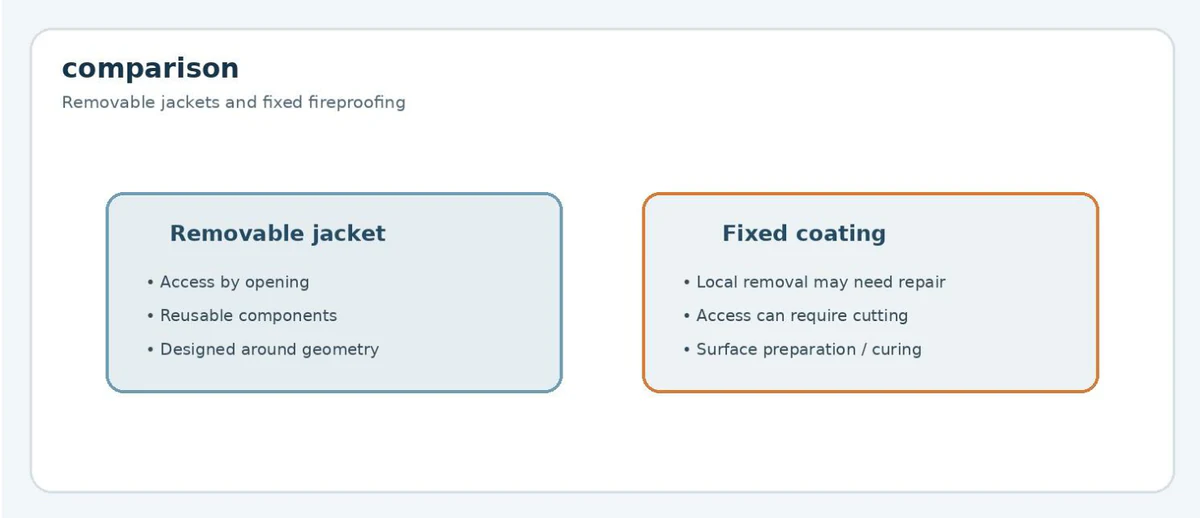
A removable jacket may be compared with a fixed coating or rigid enclosure. A removable system can be advantageous where frequent access is required and the geometry is complex. A fixed system may be more appropriate where access is rare, the substrate and configuration suit the coating system, or the project’s fire strategy specifies a bonded solution. There is no universal winner: the choice depends on hazard, equipment, environment, inspection needs, space, weight, lifecycle cost and tested performance.
Lifecycle cost should consider fabrication, offshore installation, access scaffolding, removal and reinstatement, inspection duration, repair requirements, replacement parts and operational disruption. A lower initial material cost may not represent the lowest total cost if future maintenance is difficult. Conversely, a removable jacket is not automatically more economical for every asset; the expected maintenance frequency and the full system cost should be assessed.
KLAY EnerSol presents itself as an industrial insulation and PFP solutions provider serving Malaysia, Singapore, Indonesia and the wider Southeast Asian market. Its website describes design engineering, prefabrication, installation and turnkey project management capabilities, alongside PFP jackets, panels and blankets. Asset owners can use these capabilities as a basis for a technical discussion and request project-specific evidence before final selection.
10. Conclusion: Protecting Critical Offshore Assets with Access in Mind
Offshore fire protection must balance performance, access, reliability and the practical realities of operating in a congested marine environment. Removable Passive Fire Protection jackets can be an effective option for selected valves, actuators, risers, vessels and other critical equipment where inspection or maintenance access is important. Their value lies in combining an engineered protective assembly with the ability to remove and reinstate sections under controlled procedures.
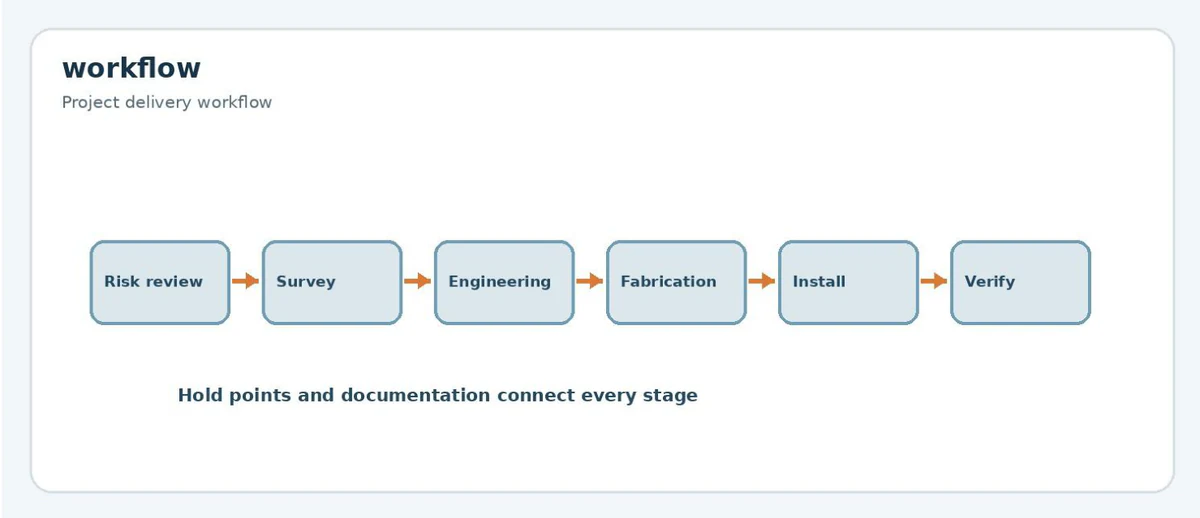
A successful solution starts with a clear fire-risk basis and verified performance requirements. It continues through accurate site survey, engineering design, material selection, prefabrication, installation quality checks and lifecycle inspection. Each stage matters. A jacket that is incorrectly specified, poorly fitted, damaged or not reinstated correctly cannot be relied upon to deliver its intended protection.
The offshore environment makes attention to detail essential. Salt spray, rain, vibration, thermal cycling, limited access and changing equipment layouts all influence design and maintenance. Corrosion management, drainage, closure integrity, traceability and clear installation records should therefore be included from the beginning rather than added after installation.
KLAY EnerSol’s published project experience demonstrates the use of adjustable removable PFP jackets alongside flexible Pyrogel® XT-F blankets to address offshore equipment protection where access and space constraints varied across the installation. Its ContraFlex® product information also describes tailor-made removable jackets for complex equipment geometries. These examples show the importance of matching the system to the actual site conditions and project requirements.
For operators planning a new installation, upgrade or integrity improvement programme, the next step is to identify the critical assets, define the fire scenario, confirm inspection requirements and review the available tested system options with a competent engineering partner. KLAY EnerSol provides PFP jackets, panels and blankets as part of its industrial protection portfolio. Visit klayenersol.com to discuss an application-specific solution for offshore platforms and other demanding facilities.
Important engineering note: This article is general technical information, not a design specification or guarantee of fire performance. Final selection, detailing, installation and inspection must follow the project design basis, current product documentation, applicable regulations and approval by the responsible engineering authority.
Sources and Technical References
- Official KLAY EnerSol website: https://www.klayenersol.com/
- Removable Passive Fire Protection for Offshore Platform project: https://www.klayenersol.com/portfolio/removable-passive-fire-protection-for-offshore-platform/
- Passive Fire Protection (PFP): https://www.klayenersol.com/passive-fire-protection-pfp/
- ContraFlex® PFP Jackets: https://www.klayenersol.com/products/pfp-jackets-contraflex/
- PFP Panels: https://www.klayenersol.com/products/pfp-panels/
- ContraFlex® product brochure: https://www.klayenersol.com/wp-content/uploads/2019/09/Advanced-Insulation-PFP-Jacket-Contraflex-Brochure.pdf
Standards mentioned in the article: ISO 22899-1 (jet-fire resistance testing) and UL 1709 (rapid-rise fire testing for protection materials on structural steel). Confirm current editions and applicability with the project engineering authority.